

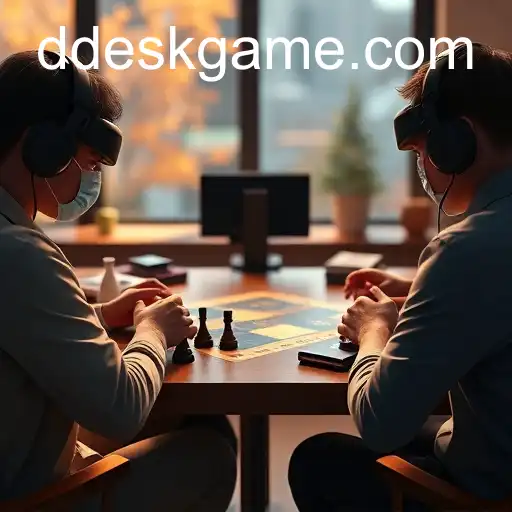

In recent years, the landscape of desk games has seen a significant transformation, driven largely by the rapid advancements in digital technology. The year 2026 marks a pivotal point where traditional forms of desk games are increasingly integrated with online gaming platforms, leading to a renaissance in how players engage with these timeless pastimes.
The concept of 'desk games' has traditionally been associated with board games and other table-top activities that foster interpersonal connections through face-to-face interaction. However, as internet accessibility becomes more ubiquitous and technology advances, the borders between physical and virtual desk games have blurred. Modern desk games are now available in digital formats that can be accessed from anywhere in the world through platforms like Steam or dedicated game websites.
One notable trend is the emergence of hybrid desk games that combine physical components with digital interactivity. These include card games with accompanying apps that bring animated features and enhanced interactivity, thus adding new dimensions to gameplay. Furthermore, augmented reality (AR) and virtual reality (VR) are being increasingly leveraged to create immersive experiences for players, providing a modern twist to classic games.
Commentators argue that this shift toward digital desk games underscores a broader trend in consumer preferences, where convenience and connectivity are paramount. These digital formats not only provide the flexibility of solo play against AI competitors but also allow real-time multiplayer experiences with gamers across the globe.
Industry experts suggest that the future of desk games will further embrace these digital trends, especially as technology continues to evolve and internet infrastructures improve. Such changes are expected to keep players engaged by offering ever-innovative gameplay experiences that were once unimaginable in traditional formats.
This dynamic shift is not without its challenges, however. Some purists express concerns about the potential loss of the social and tactile elements intrinsic to traditional desk games. To address this, developers are working on creating interactive elements that aim to replicate and enhance the social aspects that make desk games appealing.
As 2026 progresses, the fusion of traditional desk games with digital technology presents new opportunities and challenges for both developers and players. It will be fascinating to observe how the balance between innovation and tradition shapes the future of this beloved genre.

An exploration of how desk games are carving a niche in the gaming industry, amidst the digital transformation of 2025.

An exploration of the rising popularity and innovation in desk games on online platforms in 2026.

The resurgence of desk games on online platforms in 2026 and their impact on digital entertainment.

Explore the evolving landscape of desk games as technology reshapes interactive experiences in 2025.
Exploring the burgeoning trend of desk games in 2025 and its impact on workplace dynamics.

Exploring the transformation of traditional desk games into online platforms that resonate with modern gaming enthusiasts.
